Story
The Hearts and Souls of the Milky Way
A wide Cassiopeia view of the Heart Nebula, the Soul Nebula, and the young stellar neighborhoods around them.
When we look toward Cassiopeia on a clear autumn night, we’re looking beyond our own local neighborhood of the Milky Way.
About 7,500 light-years away lies one of our galaxy’s great stellar nurseries: a vast molecular cloud where stars have been forming for millions of years. We know its brightest regions as the Heart Nebula (IC 1805) and the Soul Nebula (IC 1848), though nature never drew a boundary between them. Together they form a single star-forming complex spanning hundreds of light-years across the Perseus Arm of our galaxy.
| Region | Catalog identity | What it contributes |
|---|---|---|
| Heart Nebula | IC 1805 | A bright emission nebula shaped by young massive stars and dark dust lanes. |
| Soul Nebula | IC 1848 | A neighboring emission region in the same broad star-forming landscape. |
| Double Cluster | NGC 869 and NGC 884 | A nearby pair of brilliant young open clusters in the same Perseus Arm direction. |
The names “Heart” and “Soul” are ours. The physics is timeless.
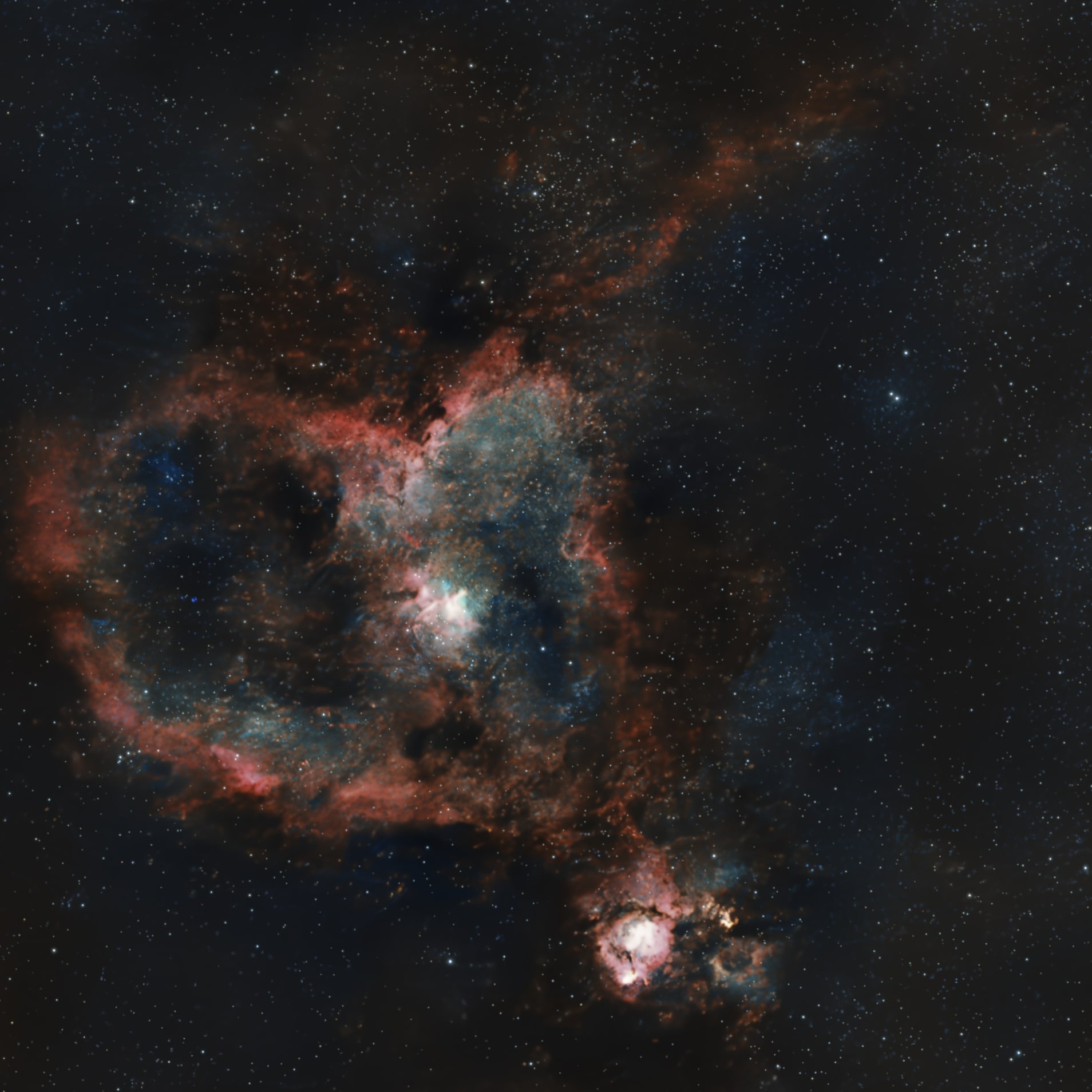
At the center of the Heart lies Melotte 15, a young open cluster only about two or three million years old. The most massive stars in the cluster are dozens of times more massive than our Sun. Their ultraviolet radiation ionizes the surrounding hydrogen, causing the nebula to glow, while powerful stellar winds slowly sculpt the cloud into pillars, cavities, and dark dust lanes.
The stars are already changing the cloud that created them.
Those same stars will also determine the Heart Nebula’s future. Within a few million years, the most massive among them will exhaust their fuel and explode as supernovae. Their explosions will scatter newly forged heavy elements throughout the surrounding cloud, enriching the next generation of stars and planets.
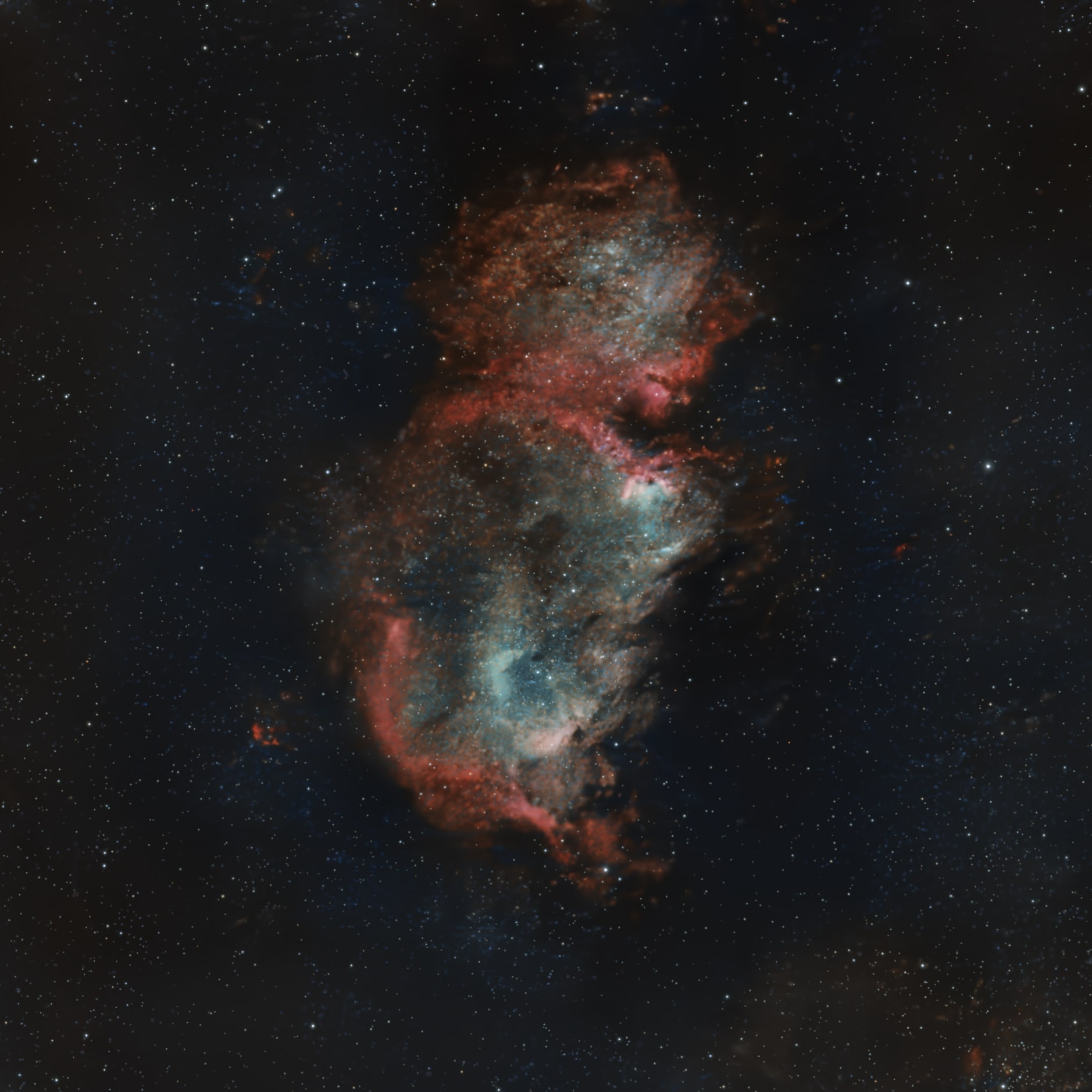
While the Heart often draws the attention, the neighboring Soul Nebula tells the same story from a different perspective. Rather than being dominated by a single young cluster, the Soul contains multiple pockets of ongoing star formation spread throughout its vast cloud. Like the Heart, it is only a few million years into its current chapter—a fleeting moment in the life of a molecular cloud. Together, the two nebulae span hundreds of light-years across the Perseus Arm, quietly converting cold hydrogen gas into the next generation of stars.
The Heart and Soul Nebulae are not permanent, fixed celestial objects. they are one moment in a much longer story.
Just beyond the Heart and Soul lies another remarkable sight: the Double Cluster. At first glance it appears unrelated, two brilliant concentrations of stars floating against the background of the Milky Way. In reality, it is another nearby young stellar population, roughly the same distance from Earth as the Heart and Soul. Although it is not physically embedded within the glowing nebulae, it occupies the same broader region of the Perseus Arm, reminding us that this part of the galaxy has been producing stars on an enormous scale for millions of years.
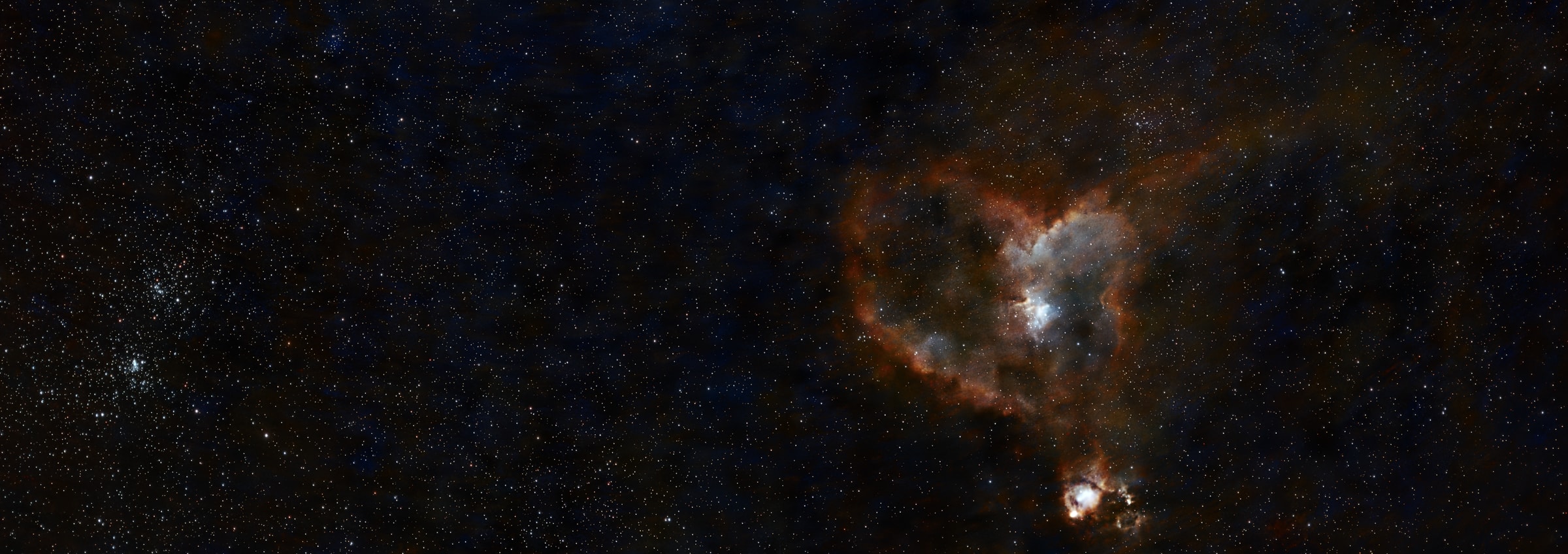
Seen together, these objects transform our understanding of the night sky.
The Heart and Soul are regions within a much larger galactic landscape—a place where giant molecular clouds collapse, young clusters ignite, stellar winds reshape their birthplace, and future supernovae prepare the raw material for another cycle of creation.
The colors in this image trace hydrogen and oxygen, revealing where radiation from young stars is energizing the surrounding gas. Hidden within those clouds are countless other elements—carbon, silicon, iron, calcium—created by generations of stars that lived and died long before the Heart Nebula existed. Those same elements will one day become part of new stars, new planets, and perhaps new life.
Every atom in our own hearts followed a similar journey.
Long before Earth formed, those atoms drifted through clouds like these. They were forged inside ancient stars, scattered across the galaxy, gathered into new molecular clouds, and eventually incorporated into the Sun, the Earth, and every living thing.
The Heart Nebula reminds us that stellar nurseries are more than beautiful clouds. They are the places where galaxies renew themselves.
We are not simply looking at where stars are born.
We are looking at one chapter in the story of how the universe became capable of looking back at itself.
We are the Hearts and Souls of the Milky Way.
Comparison
Heart Nebula Soul Nebula
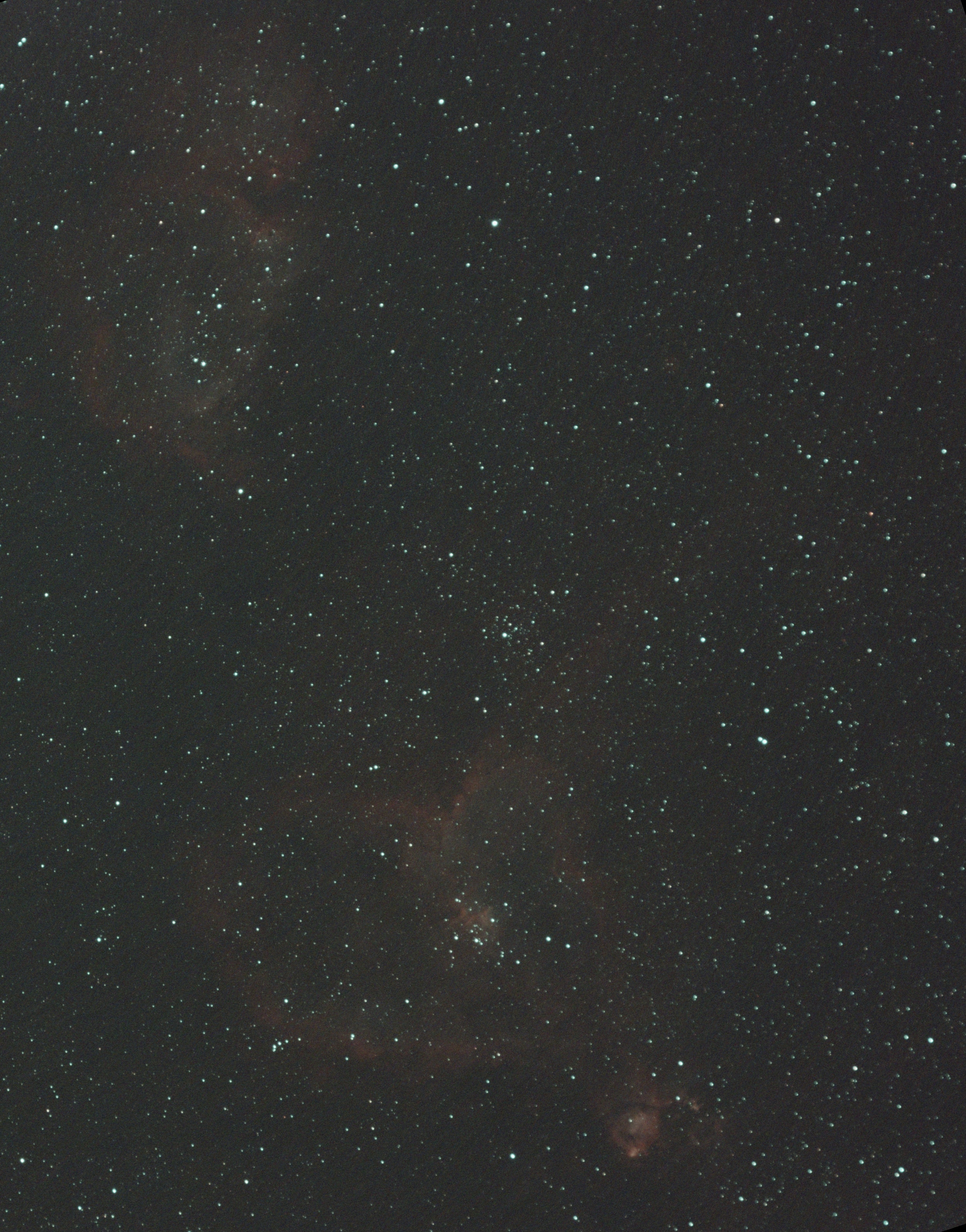
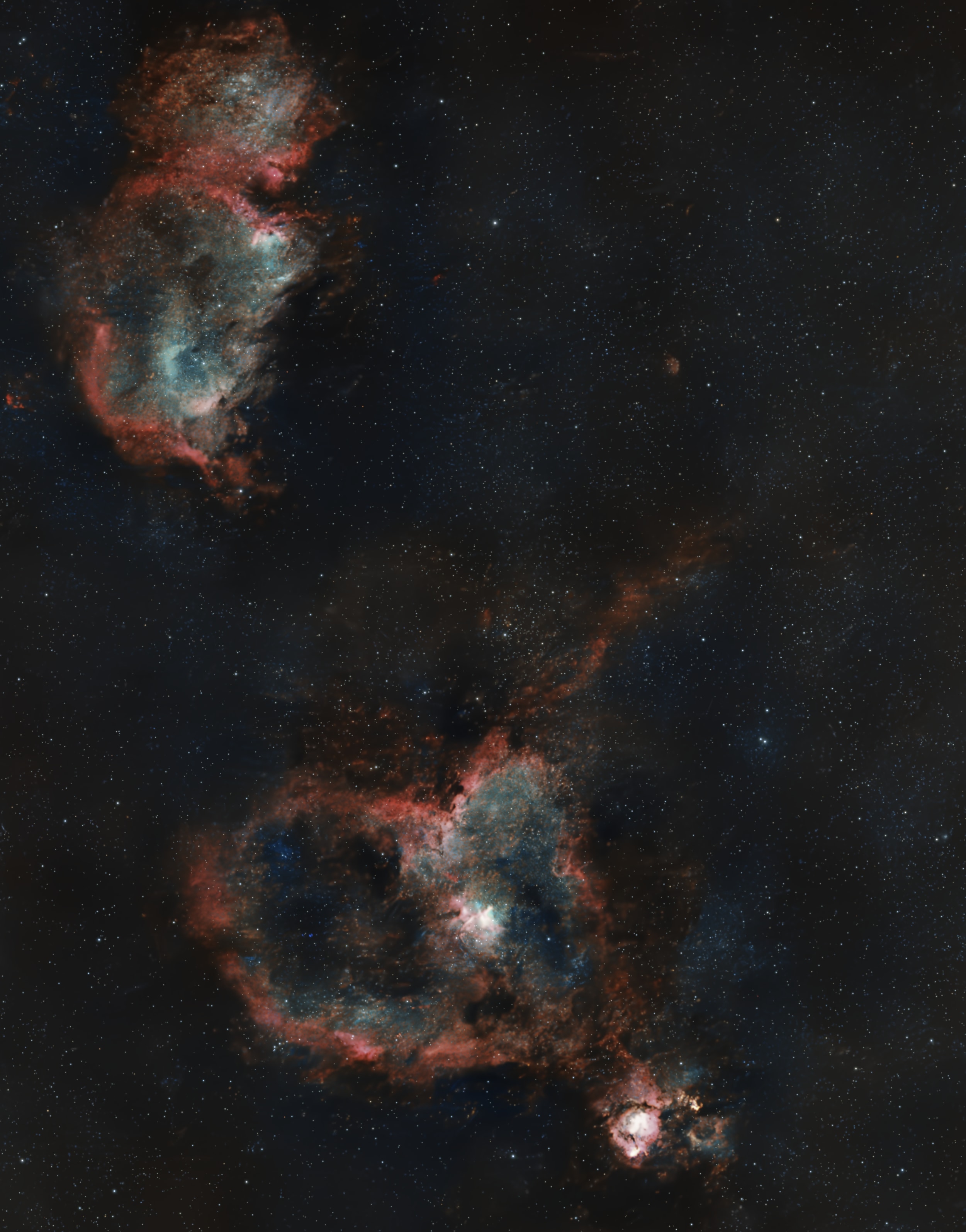
Raw, draft, and dramatic processing passes show how contrast and color choices change the same broad structure.